When Kantara 1 hit theatres, it didn’t just break box office records. It broke the wall between cinema and spirit.
Audiences walked out wide-eyed, goosebumps still fresh on their arms, whispering to each other about that ending. They wanted more. And when Kantara 2 arrived, it wasn’t just another prequel, it was a continuation of a cultural pulse.
Both films had no superstar magnetism, no extravagant CGI fireworks, no over-the-top heroism. Instead, what they had was something more primal: a raw, rooted story told with the smell of earth still on it.
The acting felt lived-in, the music throbbed with the rhythm of the land, and the narrative felt like it came from the soil beneath our feet. You don’t watch Kantara; you experience it. It sneaks up on you. You enter expecting folklore and walk out feeling as if something ancient, something you can’t exactly name, just woke up inside you.
But the true spell of Kantara lies in those last few minutes.
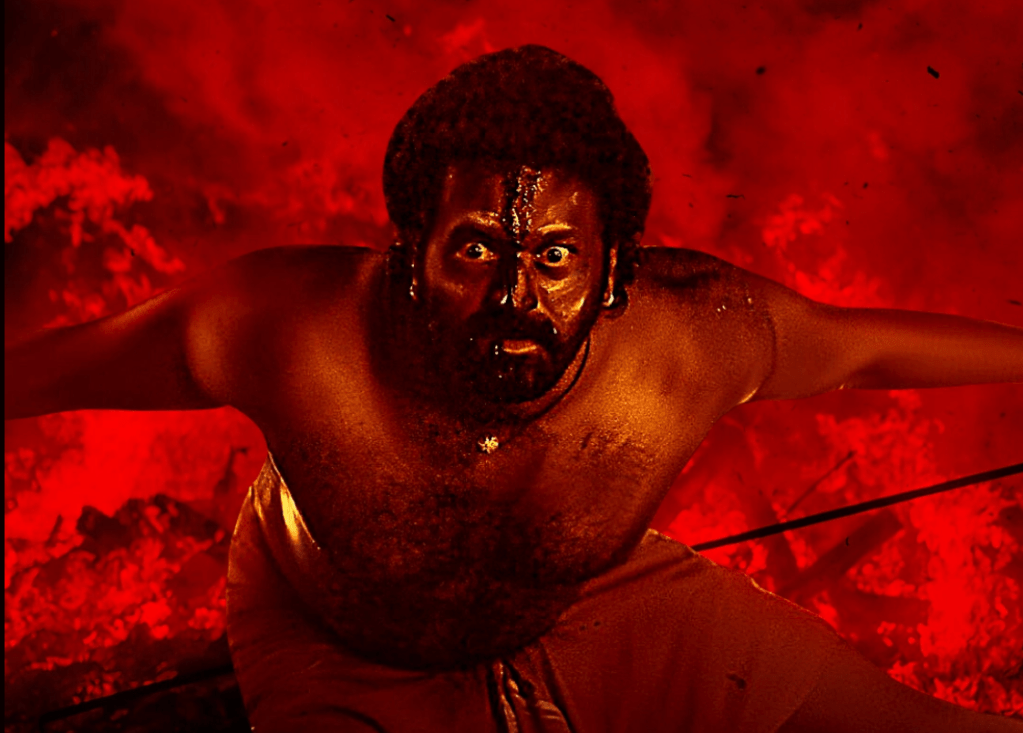
When the hero, dripping with sweat and something more than human, begins to tremble and roar. It’s not acting, it’s transcendence.
His eyes blaze, his voice drops to a level that doesn’t sound earthly, and his movements turn animal, divine, electric. In that moment, the man disappears. Something older, wilder, and sacred takes over.
Most movie-goers called it “fantasy.” But it isn’t. What you saw on screen, that fierce possession, actually happens.
It’s not myth. It’s not superstition. It’s an ancient phenomenon known as Āveśa (आवेश) or Avesham, one of the most mysterious, yet scientifically and scripturally documented experiences in the Tantrik and Shakta traditions of India.
What “Avesham” Really Means
Avesham literally means an “entry”, an “infusion”, or an “occupation”.
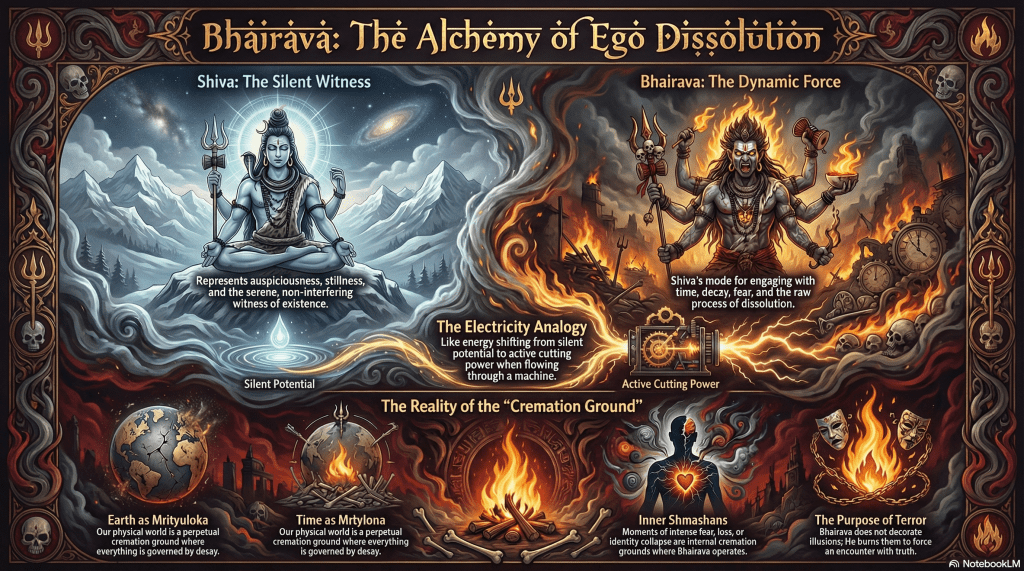
Think of it like this: your body is a 220-volt circuit. During Avesha, you get plugged into a 440-volt cosmic power source. Something vast flows through something fragile. And for a brief moment, the boundaries blur.
In the Tantrik sense, Avesha is when a higher consciousness (divine, elemental, or sometimes fierce and destructive) literally enters the human body. It can last seconds or hours. It can come as softly as dawn or strike like lightning.
There are different kinds:
- Devata Avesha: When a deity possesses the devotee.
- Bhoota Avesha: When ancestral or elemental spirits enter.
- Asuric Avesha: When darker cosmic forces take over.
- Mantra Avesha: When the vibration of a mantra completely floods the nervous system of the practitioner.
In Kantara, the hero undergoes the first kind: Devata Avesha. A sacred takeover by the forest guardian deity, the Daiva.
The Living Tradition Behind the Film
Travel along the lush coastline of Karnataka or the red soils of northern Kerala, and you’ll still find this happening today in rituals like Bhoota Kola and Theyyam.
A chosen man, the Patri or Pambada, trains for years. His life follows strict codes of purity, celibacy, diet, and devotion. Then, one night, the drums begin. Fire torches paint the darkness red. The chants rise, the air thickens, and the boundary between human and divine collapses.
The man’s breathing changes. His eyes burn crimson. His body radiates heat. He speaks in languages he never learned, tells truths no one else could know. He walks on fire, accepts offerings, blesses people – not as himself, but through himself. For those few minutes, the divine borrows a human body.
It’s not drama or hysteria. It’s voltage meeting vessel.
What Exactly Happens Inside the Human Body
Avesha isn’t random. It’s precision spirituality.
The human nervous system is a grid of subtle channels called Nadis. When you chant, dance, or breathe rhythmically, these Nadis align like perfectly tuned strings of a sitar waiting for the master’s touch.
At the height of invocation, energy (Shakti) descends through the crown (Sahasrāra Chakra).
Physically, the body floods with adrenaline, dopamine, and endorphins, dulling pain, sharpening focus, and silencing fear.
Spiritually, the individual life-force (Prana) steps aside, and a higher current of the deity’s Maha-prana flows through the same circuits.
That’s why the possessed can do the impossible — lift weights no human could, dance on embers, or speak with voices that aren’t their own.
It isn’t acting. It’s energy management.
Why the Superhuman Strength?
Normally, our brain is like a nervous parent. It limits our muscles to about 40% of their potential, just to keep us safe.
But in Avesha, that parental control is switched off. The divine driver takes the wheel. Pain disappears, fear evaporates, and every cell becomes a conductor of cosmic energy.
The result is a glimpse of what humans can be when they stop being just human.
That’s how Daiva dancers walk through fire or strike with impossible force.
It’s the same underlying principle that lets yogis meditate in snow for hours or walk unharmed across burning coals.
The Dangers of Playing with Voltage
Tantra has a simple rule: never invoke what you can’t contain.
If an unprepared person tries Avesha without purification, initiation, or guidance, the system short-circuits.
The body trembles uncontrollably. The mind fractures. The soul weakens.
Worse, lower astral entities (those that pretend to be divine) can hijack the ritual. And the body.
That’s why every authentic path insists on initiation (Diksha) from a living Guru. Without that grounding, calling a deity into your system is like inserting a tiny light bulb into a thunderstorm.
You might glow for a second… then you burn.
The Kantara Moment
In the Kantara movie, the protagonist is the Kulapatri, the hereditary vessel of the forest Daiva.
When the balance of the land is disturbed and Rta (cosmic order) shakes, the Daiva reclaims its chosen body through ancestral link and karmic permission.
His unearthly speed, his roar, his invulnerability are dramatic echoes of a real metaphysical event: the perfect synchronisation of a man’s Prana with a deity’s Maha-prana.
When the mission is complete, the current withdraws. The light goes out. The man collapses.
It’s not fantasy. It’s Rudra-Avesha, the fierce, protective descent of divine power that shakes the body but restores the world.
So, Is It Real?
Yes. Entirely. Whether you believe it or not changes nothing.
From the Theyyams of Kerala to the Aghoris of long-forgotten cremation grounds the Himalayas, Avesha still happens. Not once in a century, but every year, in hundreds of villages, temples, and secret sanctums.
Doctors call it a “trance state.” Anthropologists call it “ritual embodiment.”
Tantriks call it the meeting of two breaths.
And the truth lies in the overlap. In that electric instant when the human and the divine share the same heartbeat.
Because Avesha isn’t about losing control. It’s about perfect surrender.
It’s what happens when your devotion becomes so total, so fearless, that the Divine borrows your hands, your voice, and your eyes, just for a little while to remind the world that Gods still walk among men.
Avesham is not an outdated myth or cinematic exaggeration. It is the living heartbeat of a civilisation that never separated biology from divinity.
Kantara didn’t invent that moment of possession. It merely filmed what’s been happening in the shadows of Indian nights for thousands of years.
The drums still beat.
The Daiva still descends.
And somewhere, in some corner of this land, another human body is preparing to host the storm of God.




 Sadhana Secrets